Register Now!
This is not your average professional development program! During this action-packed week you will learn approaches, methods, and activities for engaging both children and adults with nature. In our world, so many young people are isolated from nature in their daily lives. As educators, we have the power to rekindle this connection to nature for our students. Central to our work this week will be discussions around improving equity, diversity, inclusion, and belonging in outdoor spaces. Our goal is for you to leave empowered to improve access to the outdoors in your own community!
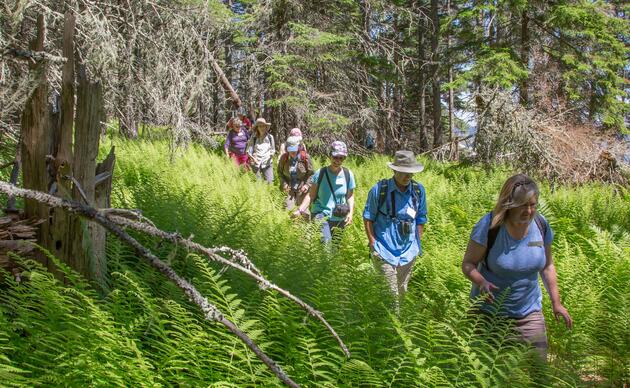
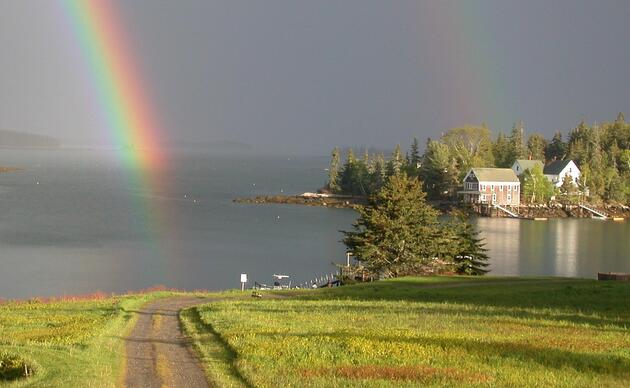
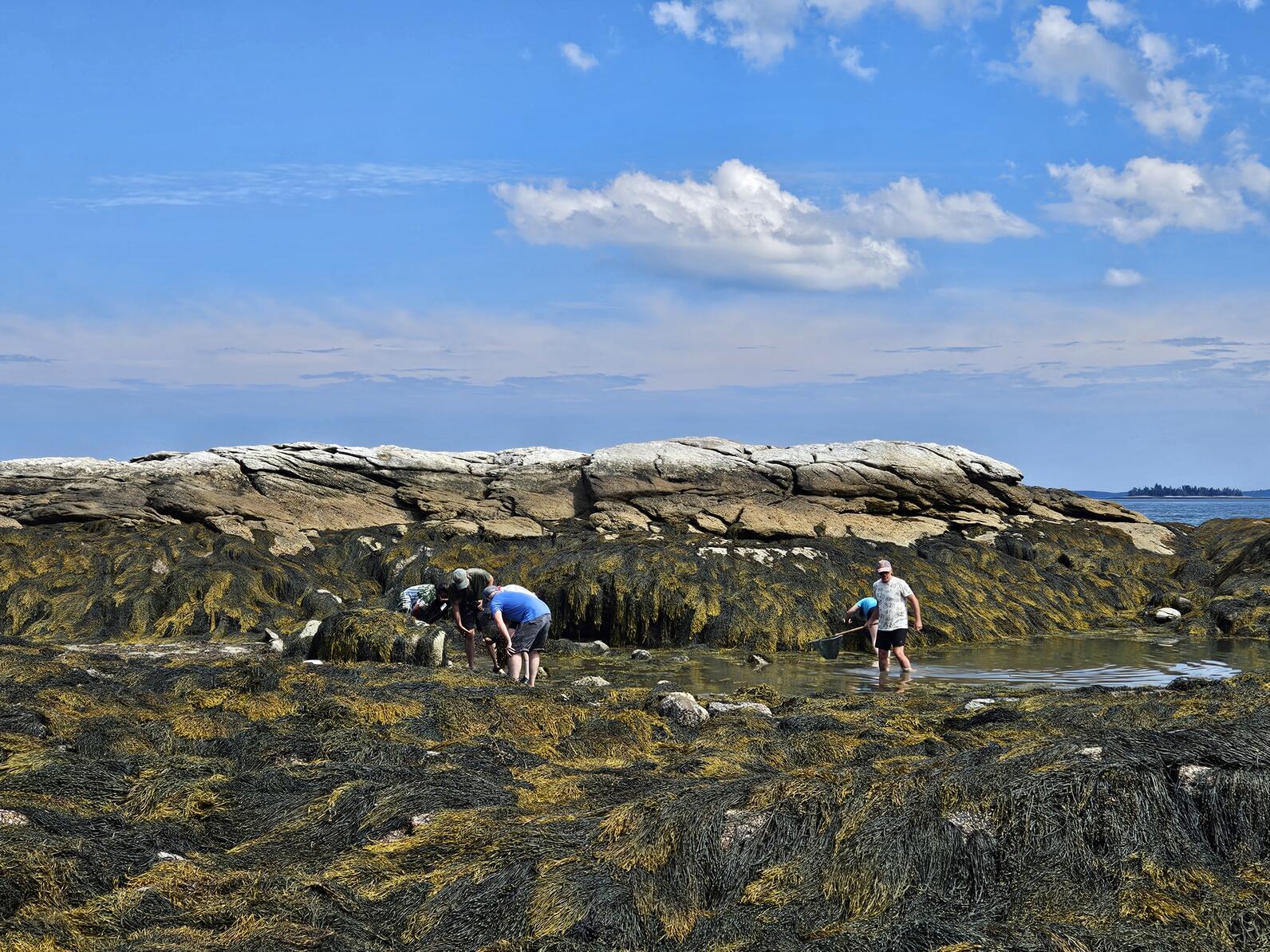
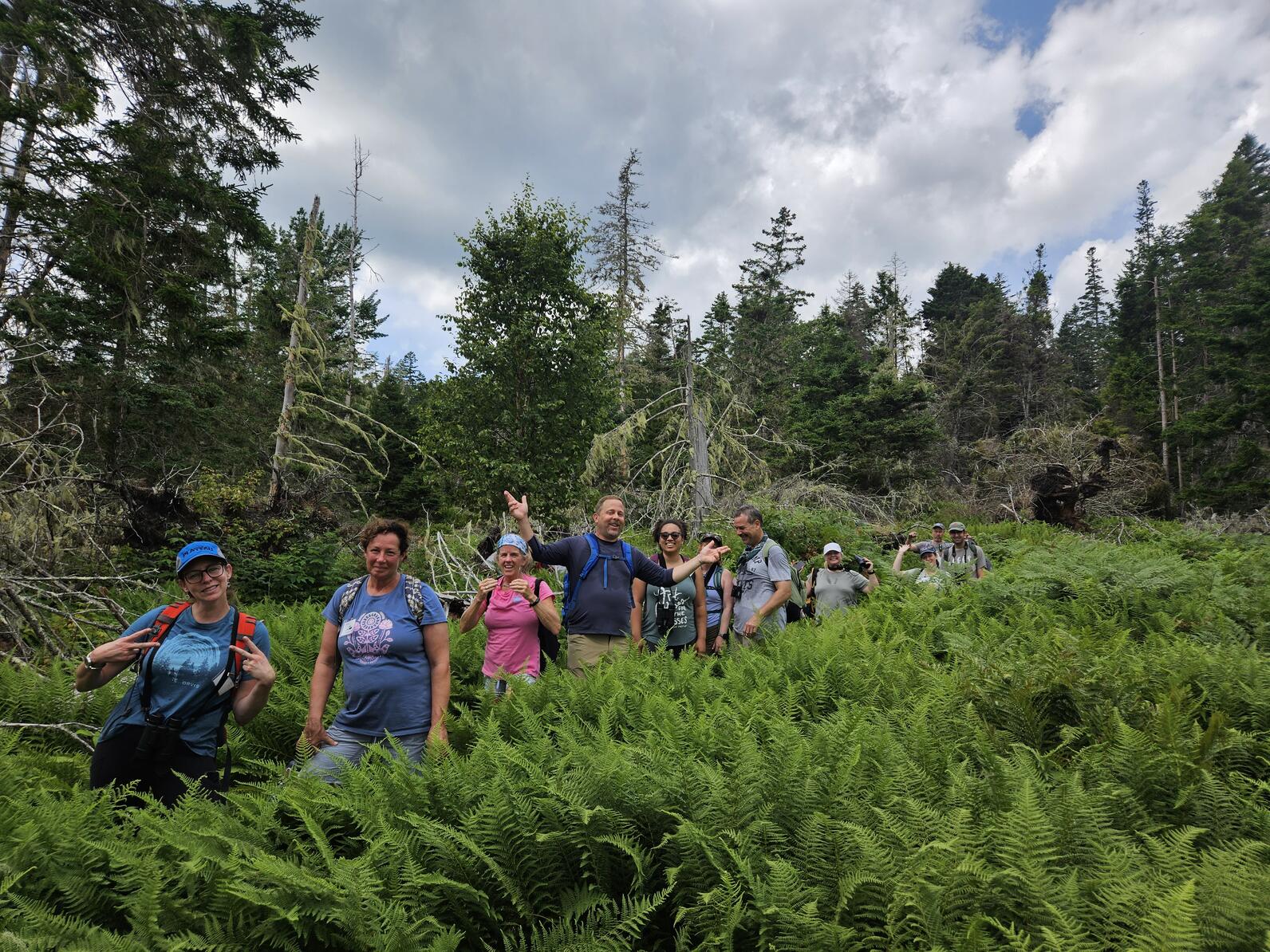
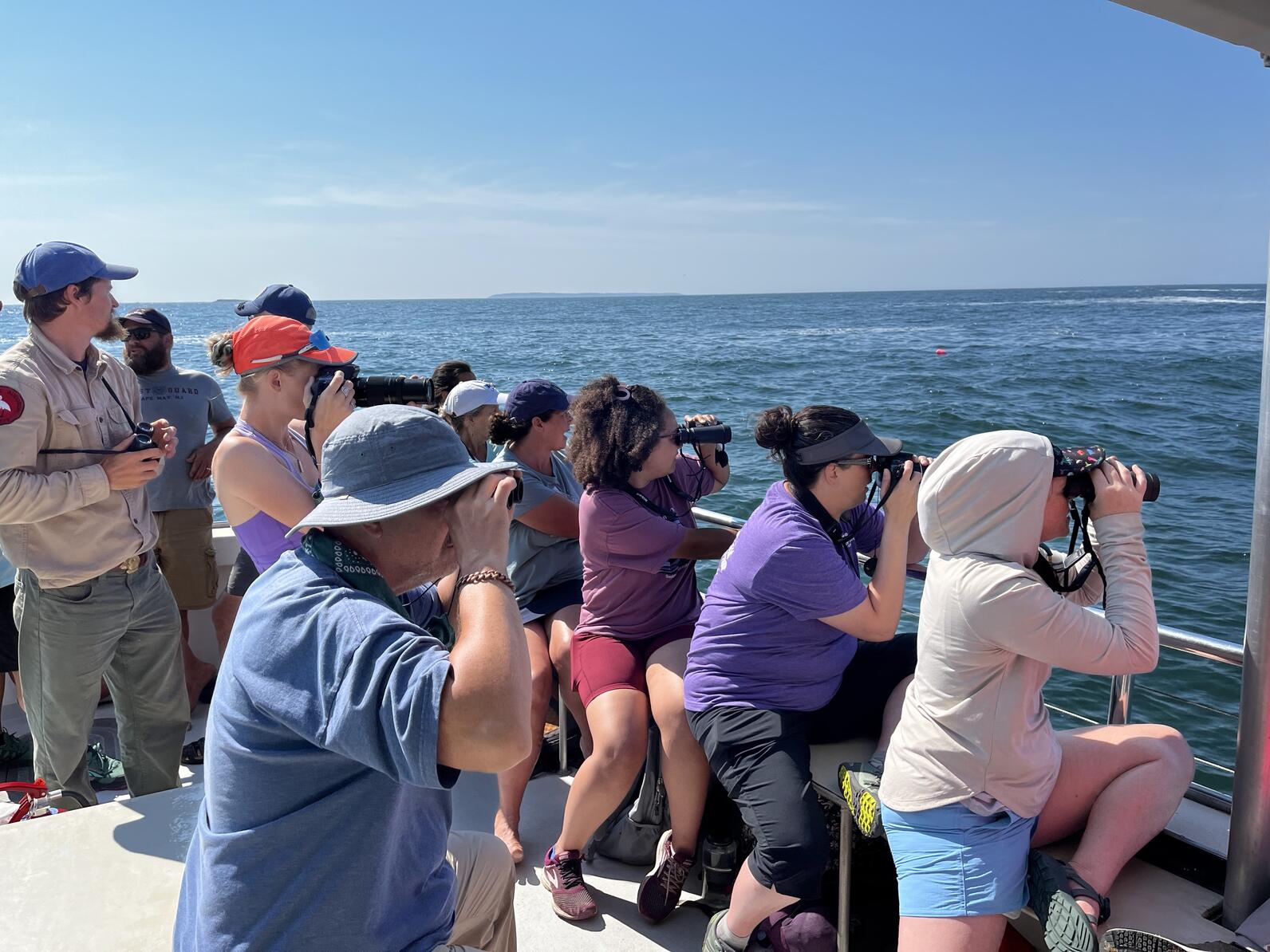
Throughout the week, you will explore an abundance of habitats on Hog Island like the tide pools, spruce-fir forest, marshes, bogs and streams. You will embark on a full day adventure to Eastern Egg Rock to see the restored puffin and tern colony. In a beautiful outdoor setting, these experiences provide a wonderful opportunity to learn new methods of teaching to bring home to your students. Some workshops may include incorporating art, journaling and social-emotional skills into your science lessons and techniques for teaching outside in any environment. Most importantly, you will join a community of fellow educators from a diversity of backgrounds. This will be a communal learning experience that is guaranteed to fill up your cup as you head into the new school year.
Educator’s Week has been running since the camp opened in 1936. We hope you will come be a part of the long legacy of learning and laughter at Educator’s Week this year.
4 Continuing Education Credits (CEUs) are available through the University of Southern Maine for completing the course. After the program, you will be given a link and instructions for how to access the credits.
Pricing: Out of State Tuition: $1,525, In State Tuition (for Maine educators): $800
The base registration fee includes meals, housing, instruction, and all field trips. This price is based on a standard shared room (with 2 twin beds) a shared bathroom. A limited number of upgraded accommodations are available for an additional cost. Two upgrade options are a single room for solo travelers or a room with a private bath for two people traveling together. There are no single rooms with private bathrooms available. Please see our lodging page for more information.
In state tuition is available for educators working in the state of Maine. Please contact hogisland@audubon.org from your work email to verify your eligibility.
Participants must arrange their own transportation to and from the Audubon dock in Bremen at the start and end of the session. Please see our transportation page for more information.
There are several scholarship opportunities available to help participants attend Hog Island sessions! Please see our scholarships page for more information about Hog Island Scholarships. You should also check with your local Audubon chapter or bird club for additional opportunities.
Requirements: This program is open to all educators! No prior experience required.
Director: Khavin Debbs
Khavin Debbs was born in Sacramento, California. After teaching preschool and elementary school for homeless children he relocated to Washington in 2013. There he finished his bachelors degree in Environmental Education from the Evergreen State College. He then later received his Urban Environmental Education Masters from Antioch University, where his thesis focused on decolonizing the outdoors for families of color. He is currently working as an Education Professor at North Seattle College. In his spare time Khavin enjoys watching and playing soccer, mycology, rock climbing, cooking, and art. Khavin goes by the pronouns He, Him, His.
Instructors: Ted Gilman, Nicole Jackson, Margaret Lechner, and Lindsay Strout
Ted Gilman is a naturalist and environmental educator at Audubon Greenwich, where he has inspired a love of nature in generations of children and helped train educators from across the country. Ted received his bachelors degree in Biology from Earlham College and did graduate work in Science and Environmental Education at Cornell University. He has led Audubon trips to Trinidad & Tobago and Kenya, as well as served as an education volunteer for the International Crane Foundation in northern China. Ted began teaching on Hog Island in 1974 and has returned over the past four decades to serve as an instructor for ornithology and family camp programs.
Nicole Jackson is an environmental educator, urban birder, and park advocate from Cleveland, Ohio. A 2011 graduate of The Ohio State University with a Bachelor of Science in Environmental Education, she has spent over 15 years working with nonprofits, universities, and conservation groups. Her passion for nature began in childhood and grew through roles like Toyota TogetherGreen's Youth Fellowship. National Parks Conservation Association’s Next Generation Advisory Board and national co-organizer of Black Birders Week.
Margaret Lechner credits her parents’ love of nature and the outdoors for inspiring her career as an experiential educator. For 25 years Margaret was Jill-of-all-trades (Associate Professor of Biology) at Earlham College, where her work included directing the Wilderness Program, initiating the East Africa semester, teaching biology and education courses, and participating in Quaker Foundations of Leadership. She spent a third of her time in the field, much of it leading Southwest Field Studies, a semester of natural science and education study with a significant back country component.
Margaret's post-Earl ham career has included directing a community mediation center, facilitating AVP (Alternatives to Violence) in US prisons and Central American communities, and organizing AVP World Gatherings in Guatemala, Ireland and Nepal. During Covid she discovered the stories in her that needed to be told, co-writing They Kindled a Fire: The First 50 Years of Wilderness at Earlham and contributing to Diversity, Equity, Inclusion and Belonging Field Guide: Stories of Lived Experiences.
She delights in her children (one son, one daughter-in-law and many students), bread baking, fabric arts and Tai Chi. Contact Margaret at: Margaret.lechner@gmail.com.
Lindsay Strout is a Maine high school science educator who is very passionate about the outdoors and all it has to offer! She studied at the University of Prince Edward Island majoring in Biology and minoring in Environmental Studies. She then left North America and headed to South Korea to teach English for a few years, then traveled for an additional year to 9 other countries, living out of a backpack, exploring the various cultures, food and languages. Upon returning to Maine, she was introduced to nature journaling and currently teaches wildlife biology at Sanford High School. Last year, Lindsay finished her year-long course to become a Maine Master Naturalist as well! She grew up in a very outdoorsy family, from hiking and bicycling to canoe camping. She can’t wait to share her passion for the outdoors and nature journaling with you this summer!
NOTE: Audubon reserves the right to alter itineraries, instructors and particular arrangements, or to substitute similar itineraries or arrangements, at no penalty. If Audubon cancels a session, it will issue full refunds of all deposits or payments to the paid participants.
Testimonials:
“The camp was well-balanced and fulfilling. It was great to meet other educators and share our love for the environment together.” - Brianna, 2025 Camper
“Staff cultivated a welcoming, conscientious, and genuine environment, resulting in connection, conversation, deep learning and fun!” - 2025 Camper
“I’m so grateful for the opportunity to enjoy this magical place, recharge, and learn. I felt like a kid – free to play with purpose and explore, make friends, and have fun.” - 2025 Camper
“I felt so safe, respected, cared for, and supported. What an incredible & creative staff. So much coming back to my classroom and I am leaving with so much peace” - 2025 Camper
“An overall lovely experience that was professionally, personally, and intellectually fulfilling. Thank you for sharing this special place with me.” - Darla, 2025 Camper
“This program is life-changing. I learned so much and the beauty of Hog Island is unmatched.” - 2025 Camper
How you can help, right now